




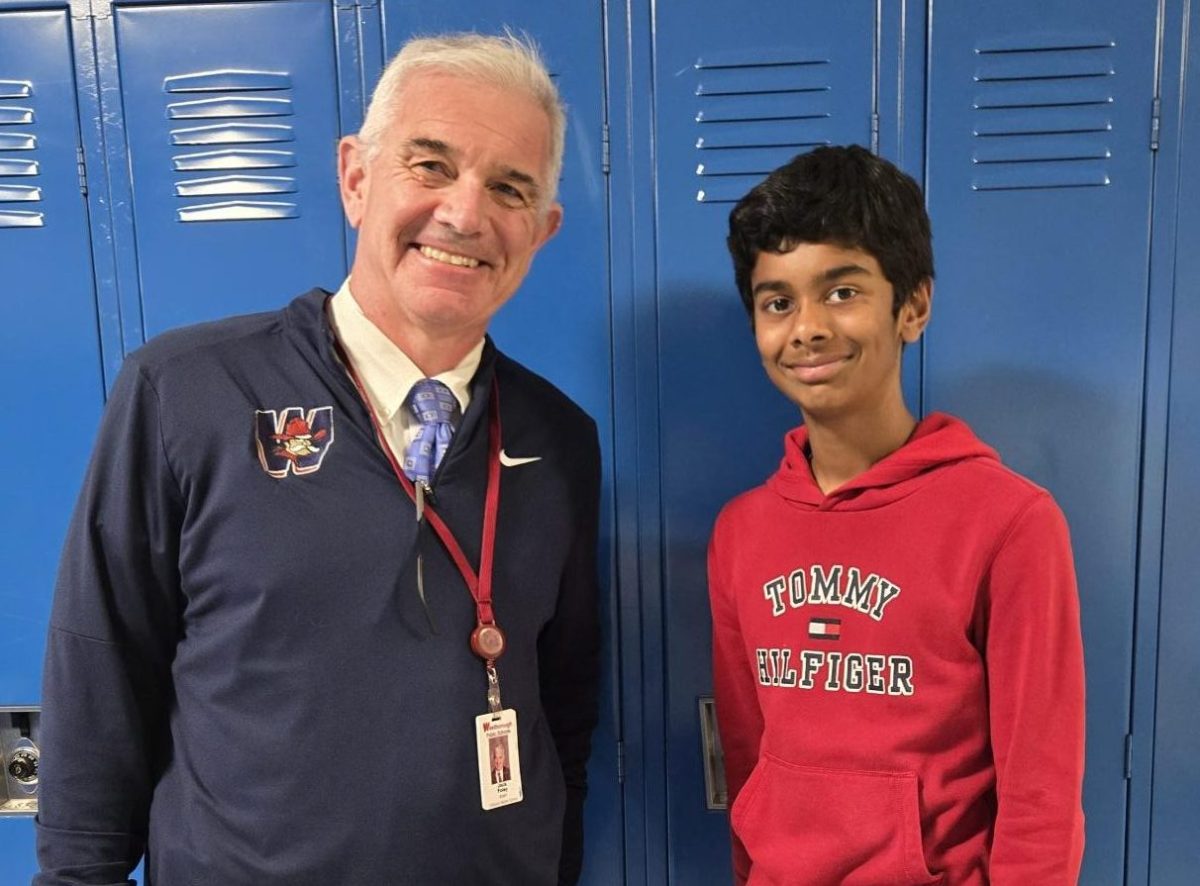


















Neil: Hello, my name is Neil Virmalwar, and welcome to article 1 of “So You Want To Be A…”, where I interview many different types of people with different careers. As the world changes around us, we are unaware of what to become. So, as we grow up, we tend to choose what we want to become later, delaying our thinking. By interviewing people that have jobs, I can help myself and others, especially 8th graders, to know what they want to be. Today, I have interviewed my own pediatric nurse practitioner, and her name is Kerrie McFeeters. Let’s begin.
Neil: First question: How did you become a pediatric nurse practitioner?
Ms. McFeeters: I initially thought I wanted to be a child psychologist working with pediatric cancer patients. I wanted to use play therapy and other types of therapies to help children cope with and fight cancer. I took a nutrition class in college, and we dissected a pig. I then thought about looking into medicine.
Neil: What did you do to become a nurse practitioner?
Ms. McFeeters: I did take the long route. Most people will go to a 4 year college and get their bachelor’s of science in nursing, and then go to graduate school to become a nurse practitioner. Because my major was psychology, and there were no nursing programs at my school, my junior and senior year were full of science classes that would allow me to apply to medical school or nursing school. I received a Bachelor of Arts, then went on to a program that combined bachelor’s of science and master’s of science.
Neil: Why did you choose to become a pediatric nurse practitioner, and what motivated you in your earlier life?
Ms. McFeeters: As I mentioned earlier, I didn’t choose this course at first. The one constant was that I have always wanted to work with children. From a young age I babysat. I have always been an avid reader. There was a series of books I read about pediatric cancer patients, and that’s where I got the idea to become a child psychologist.
Neil: What other things did you do to achieve your goal, like sports, hobbies, clubs, etc.?
Ms. McFeeters: Babysitting and reading played a huge role in helping me choose my decision. I also loved school. I always wanted to do well, and so I studied hard. Back when I was in high school, we didn’t have many choices for electives. I was able to take a 2 term psychology class and AP biology. I also worked summers in the medical records department of a hospital, so I learned a lot about charting.
Neil: Any advice to younger kids on what to do if they wanted to become a nurse practitioner?
Ms. McFeeters: Do well in science and math. Take AP classes so you can get some of the basics out of the way. This will allow you to focus more on your nursing classes, and/or take other interesting electives to make you well rounded. Learn how to communicate well with others and work as part of a team.
Neil: Can you tell me about a typical day in the life of a nurse practitioner?
Ms. McFeeters: For me, working in primary care, a typical day involves me seeing same day sick visits(children with illnesses like an ear infection, sore throat, or cold), physicals(yearly visits to make sure you’re currently healthy, keep you healthy in the future, update immunizations), and then managing chronic medical conditions like asthma, depression, or anxiety. I need to write a note about each patient I see. Sometimes I have to interpret labs I have ordered, I refill medications that are prescribed, and I also answer patient questions.
Neil: What is the most challenging/interesting part of your day?
Ms. McFeeters: I feel like every day I learn something new. Medicine is constantly changing.
Neil: What challenges did you face while becoming a nurse practitioner?
Ms. McFeeters: The hardest part for me was when I worked as a nurse and had to work overnights. I have never done well with not sleeping.
Neil: Final question! How many types of Nurse Practitioners are there, and what role do you play in your field?
Ms. McFeeters: There are so many different types. Just like with doctors, you can specialize as an NP. The 2 main tracks are pediatric and family medicine, but there is also geriatrics, acute care. You can also do extra schooling and become specialized, like as an NP in an ICU.
Neil: Thank you so much for your time! And with that last question, concludes the first article of “So You Want To Be A…”